
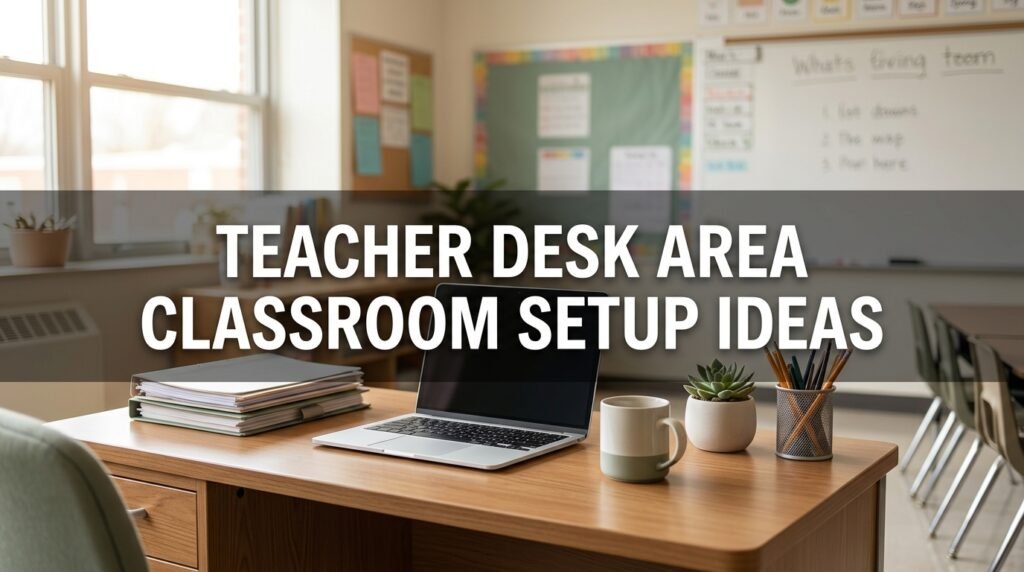
Your teacher desk area sets the tone for your entire classroom before a single student walks in. It’s the first thing you see every morning and the last thing you tidy up before heading home, so it deserves more thought than just a desk pushed into a corner.
A well-planned classroom setup does more than look nice. It keeps your lesson plans within reach, your supplies organized, and your energy focused on teaching instead of searching for a stapler. The right layout can genuinely make your day run smoother.
In this guide, we’re walking through teacher desk area ideas for every classroom size and budget, from small organizational tweaks to full setup makeovers. By the end, you’ll have plenty of inspiration to create a space that feels calm, functional, and truly yours.
Farmhouse-Style Desk Makeover
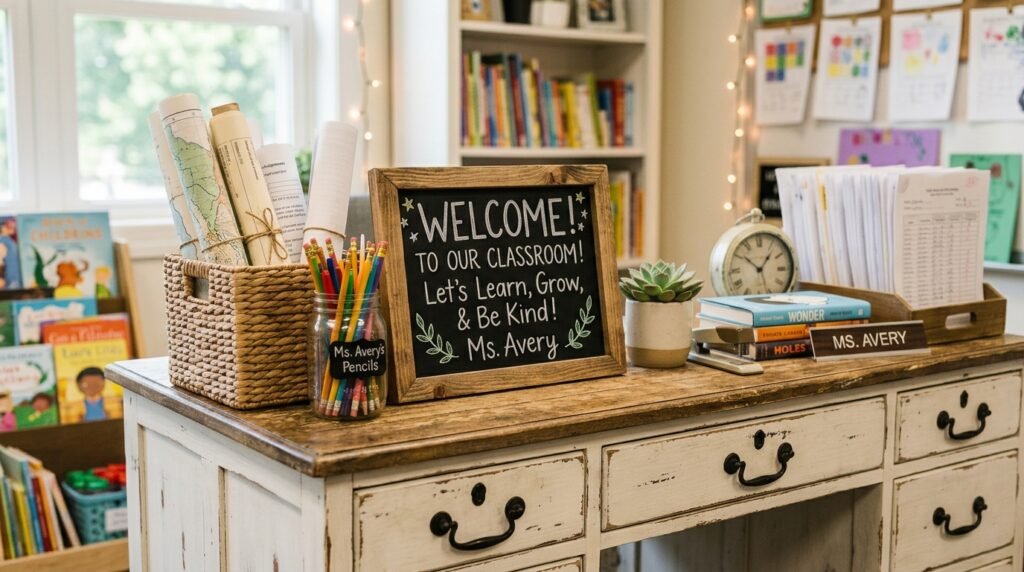
Choose a solid wood desk with a distressed white or cream painted finish, keeping the hardware in aged black or bronze for contrast.
Add a woven basket or two on top for loose supplies, and a small mason jar filled with pencils instead of a plastic cup.
Hang a simple wood-framed chalkboard sign nearby with your name or a welcome message written in script.
This look works because it feels warm and lived-in rather than institutional, exactly what a classroom needs when students spend seven hours a day in it.
Painted Desk Glam Makeover
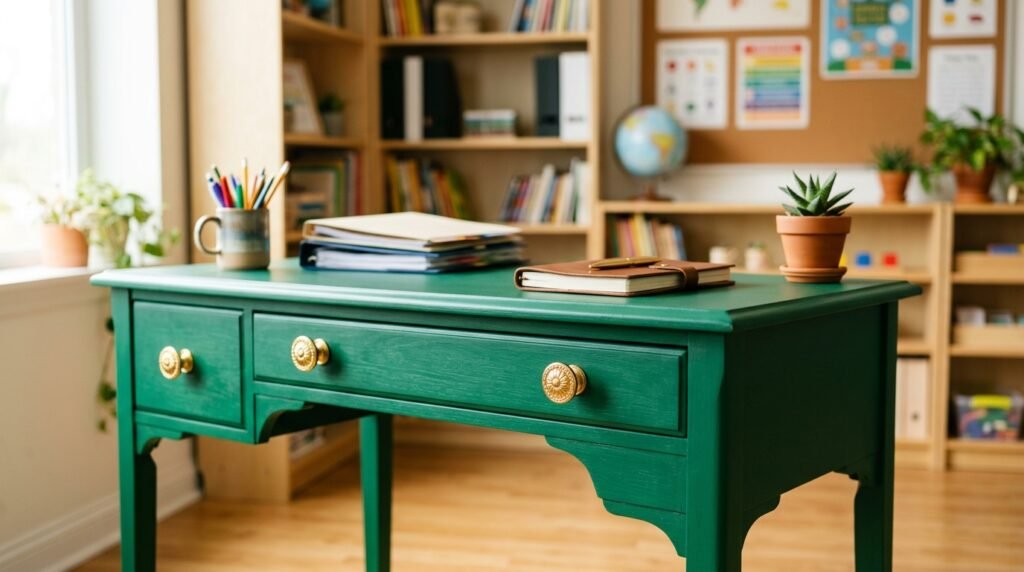
Sand down an old metal or laminate desk and repaint it in a bold color like navy, blush, or emerald using furniture paint made for durability.
Swap the original hardware for brass or gold knobs, an easy upgrade that makes the whole desk look more expensive than it is.
Add a coat of clear sealant on top of the desk surface so it holds up to daily wear without chipping.
A simple paint job turns a tired, scratched-up desk into something that actually feels like it belongs to you, for the cost of a can of paint.
Monogrammed Desk Accent
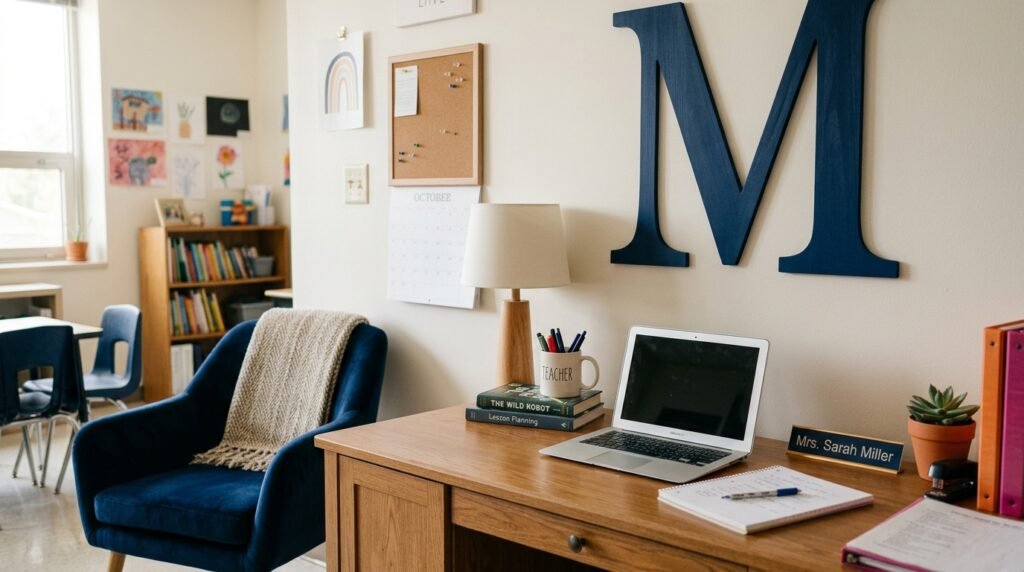
Add a wood or acrylic monogram initial to the front of the desk or mounted on the wall directly behind it, sized large enough to be a clear focal point.
Keep the surrounding decor simple and neutral so the monogram reads as the intentional centerpiece, not just another item on a cluttered shelf.
Match the monogram’s color to one accent already in the room, like your desk chair or a nearby storage bin.
This one small detail makes the space feel unmistakably yours, which matters in a room you spend more waking hours in than your own living room.
Small Teacher Desk Area Solutions
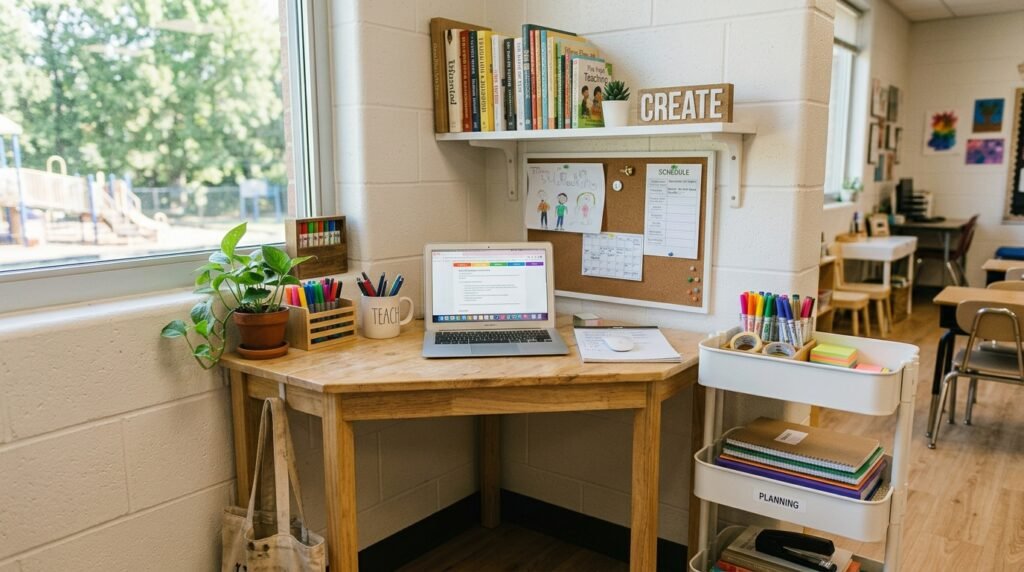
Choose a compact corner desk instead of a traditional rectangular one, so it fits into unused space without eating into the room.
Mount a small shelf directly above the desk for books and supplies, keeping the desktop itself clear for daily work.
Use a slim rolling cart beside the desk instead of a bulky filing cabinet, since it takes up a fraction of the floor space.
A small desk area doesn’t have to mean a cramped one, it just means every piece needs to earn its spot.
Teacher Desk Corner Nook Setup
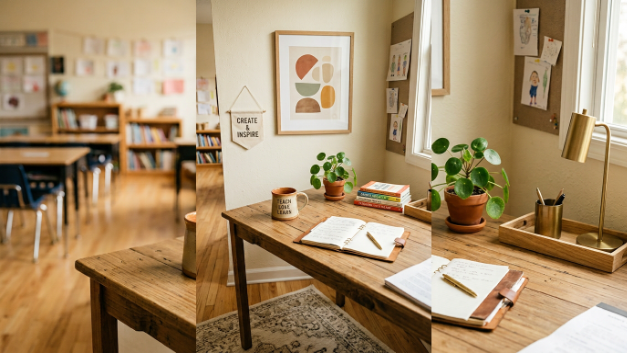
Position the desk diagonally in a corner rather than flat against a wall, which naturally creates a defined nook instead of a random piece of furniture.
Add a small area rug underneath just the desk and chair to visually separate the nook from the rest of the classroom.
Hang a single piece of art or a bulletin board at eye level directly in the nook’s sightline, giving the corner a clear focal point.
Treating the desk area like its own small room, rather than an afterthought, makes the whole classroom feel more intentionally designed.
Under-Desk Clutter Hideaway
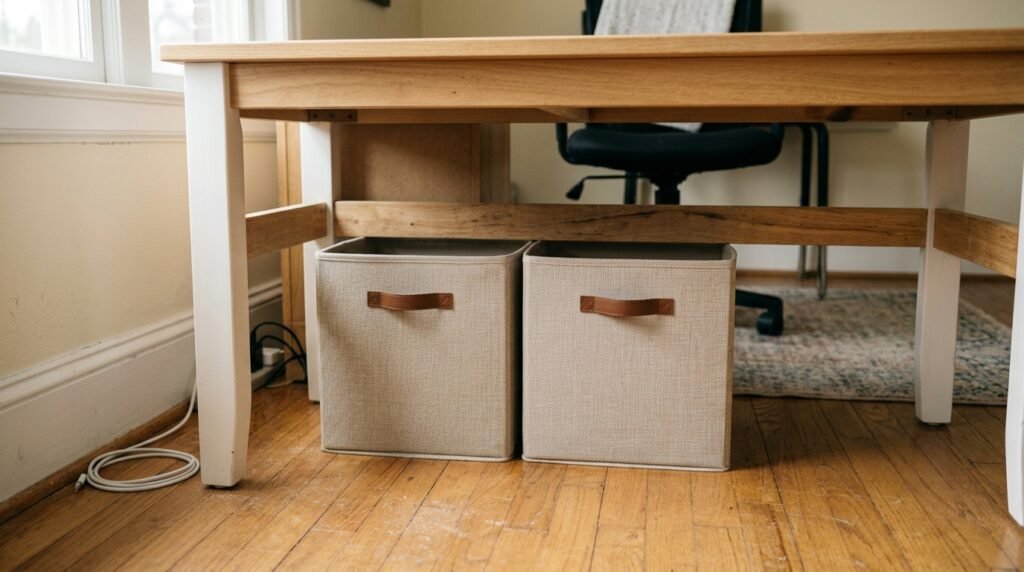
Slide a fabric storage bin or two underneath the desk, sized to fit the exact space between the legs without blocking your knees.
Use one bin for personal items and another for classroom supplies you don’t need daily, keeping the two categories from mixing.
Choose bins in a color that blends with the desk rather than standing out, so the storage stays functional without becoming visual clutter.
Whatever doesn’t have a home ends up on top of the desk, so giving the space underneath a job keeps the surface clear.
IKEA Classroom Organization Hacks
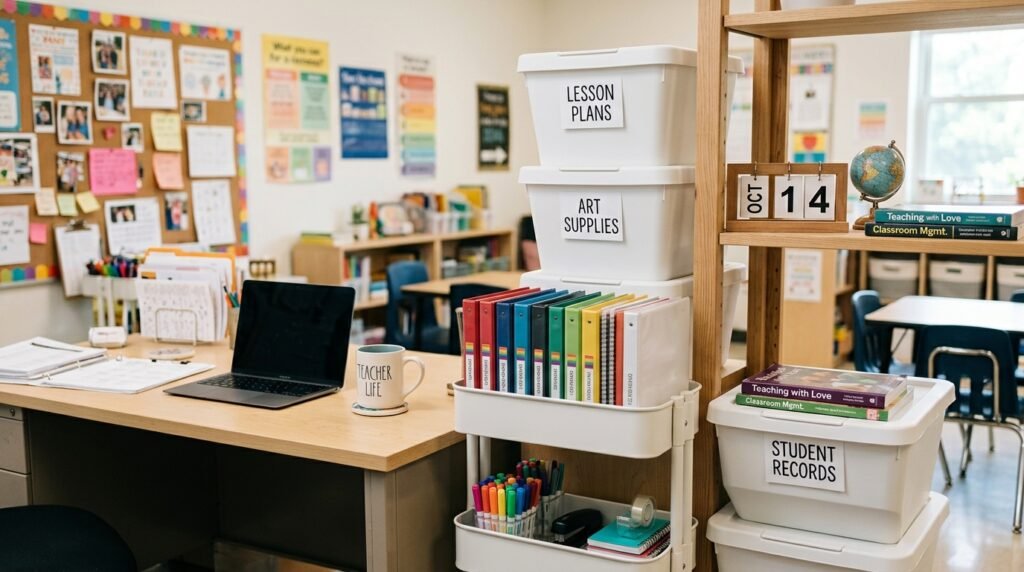
Use stackable IKEA storage bins on a shelf beside the desk, labeled by subject or supply type so everything has an obvious home.
Add a small IKEA cart with wheels next to the desk for materials you move between stations throughout the day.
Choose a simple IKEA drawer unit that fits under or beside the desk for extra storage without the cost of built-in cabinetry.
Budget furniture doesn’t have to look like budget furniture, especially once it’s organized and doing exactly what you need it to do.
Dollar Tree Desk Organization Finds
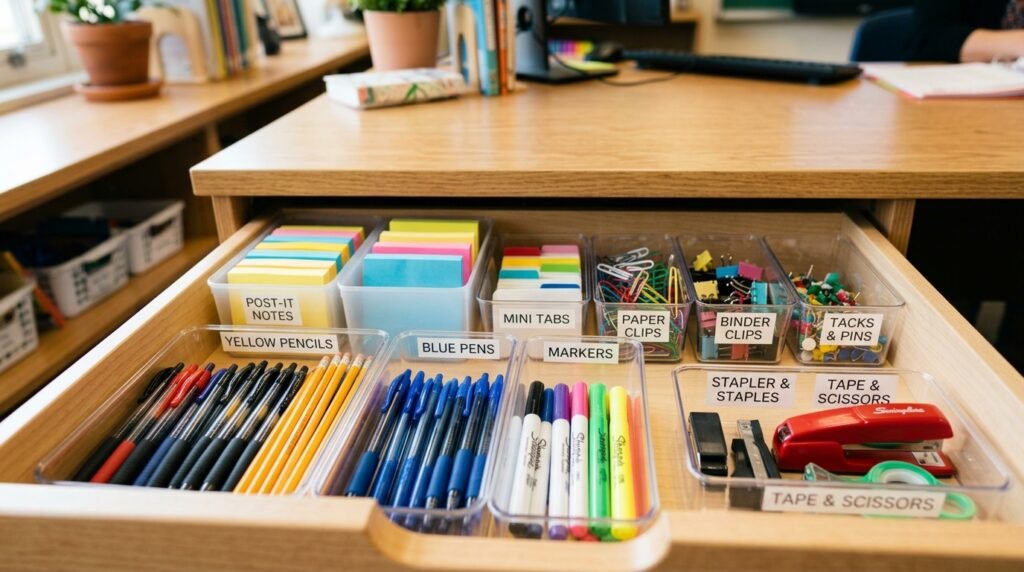
Use small Dollar Tree bins and trays to sort pens, sticky notes, and paper clips into individual compartments instead of one messy drawer.
Add a Dollar Tree magazine file or two, turned sideways, to store folders and lesson plans upright where you can see them at a glance.
Label each container with a simple printed sticker so the system stays organized even on your busiest days.
A fully organized desk doesn’t require an expensive shopping trip, just a system that makes sense for how you actually work.
Rolling Cart Command Center
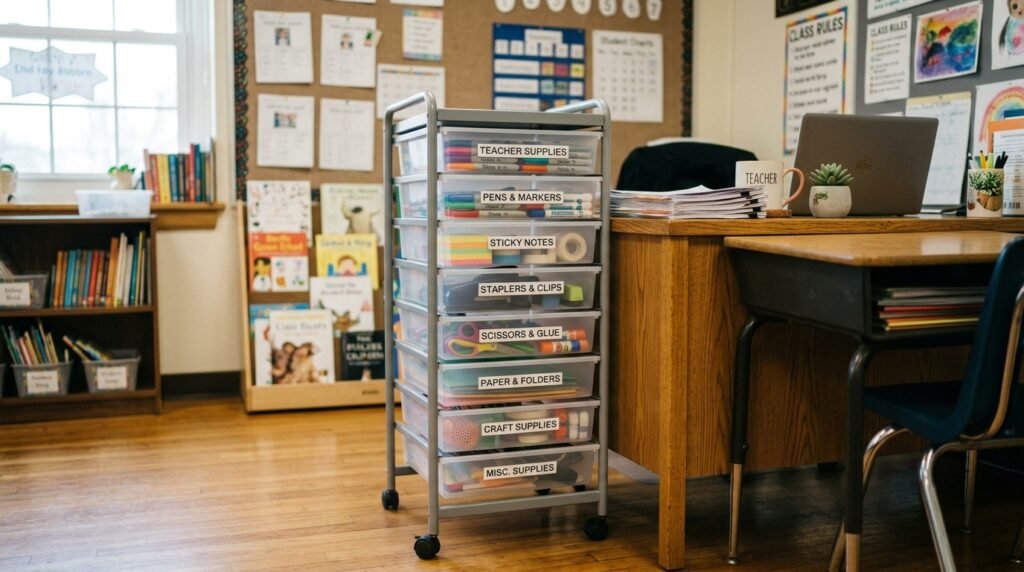
Stock a multi-drawer rolling cart with your most-used daily supplies, positioned right beside the desk within arm’s reach.
Label each drawer clearly, grouping items like grading tools, sticky notes, and technology cords into their own separate spaces.
Keep the cart mobile on purpose, so you can wheel it to a reading corner or small group table without repacking anything.
Having one command center for daily essentials means less time searching and more time actually teaching.
Labeled Zone System
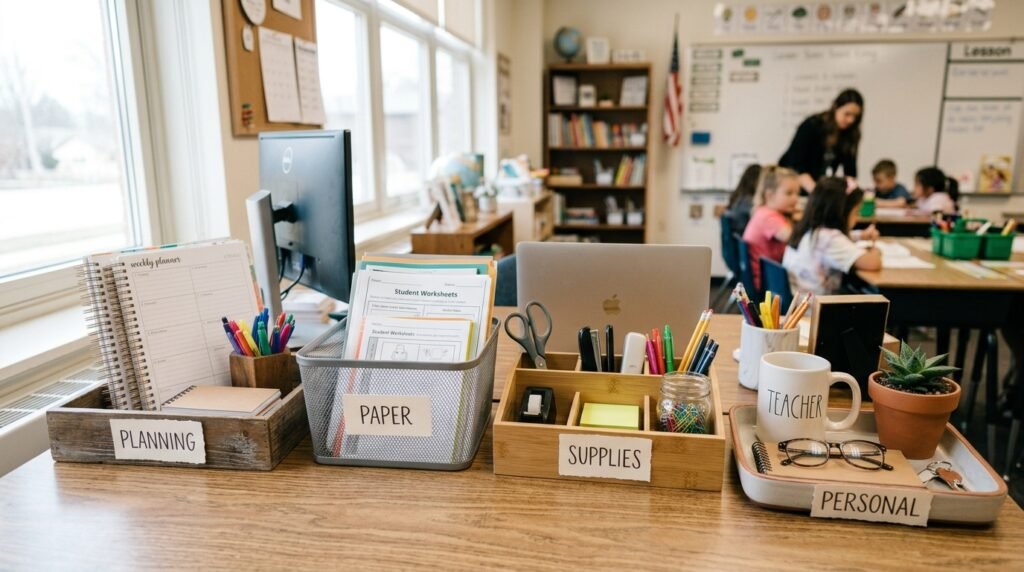
Divide the desk area into four clear zones: planning, paper, supplies, and personal, each with its own designated bin or tray.
Use consistent labels across all four zones so the system stays easy to follow, even for a substitute teacher stepping in for the day.
Keep the personal zone small and separate, just enough space for a photo or a favorite mug, so it doesn’t creep into the working areas.
When everything has a zone, cleanup at the end of the day takes minutes instead of turning into a full reorganization.
Bookshelf and Filing Cabinet Combo
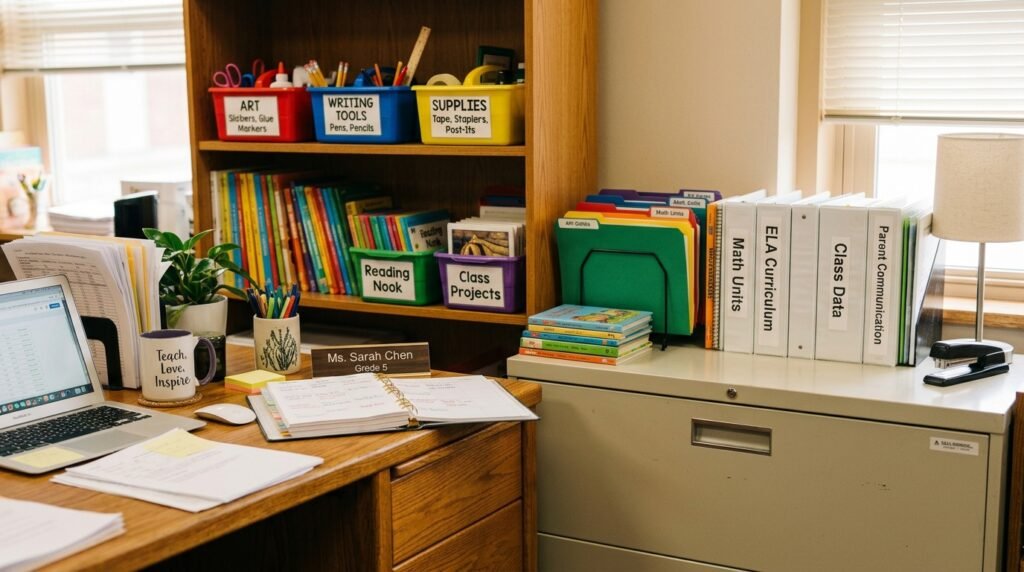
Place a horizontal filing cabinet directly in front of or beside the desk, using its flat top as extra workspace for stacking papers.
Add a bookshelf behind the desk chair, stocked with drawers and caddies for supplies instead of just books.
Keep frequently used files in the top drawer of the cabinet and archive older paperwork in the bottom drawer, so the system stays useful all year.
This combination turns two separate pieces of furniture into one connected workstation, without the cost of a custom built-in.
Matching Desk Organizer Set
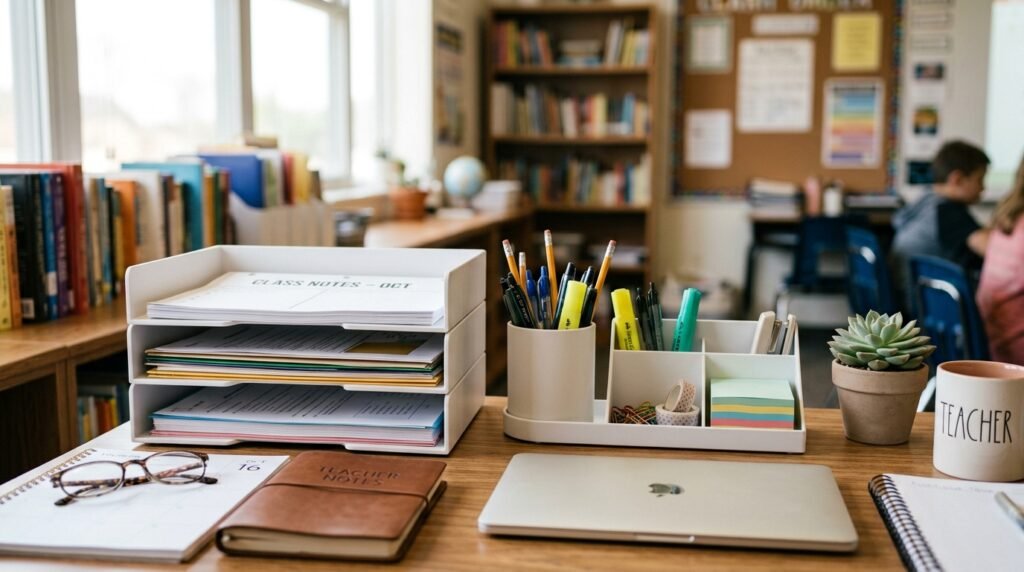
Replace mismatched pen cups and random containers with a single coordinated organizer set in one color and material.
Choose a set that includes a pen holder, a paper tray, and a small caddy, so every desktop item comes from the same collection.
Keep the set in a neutral tone like white, black, or natural wood so it doesn’t compete with any classroom theme you’re already using.
A matching set does more visual work than people expect, it’s often the single change that makes a desk look pulled together.
Chevron or Polka Dot Themed Decor
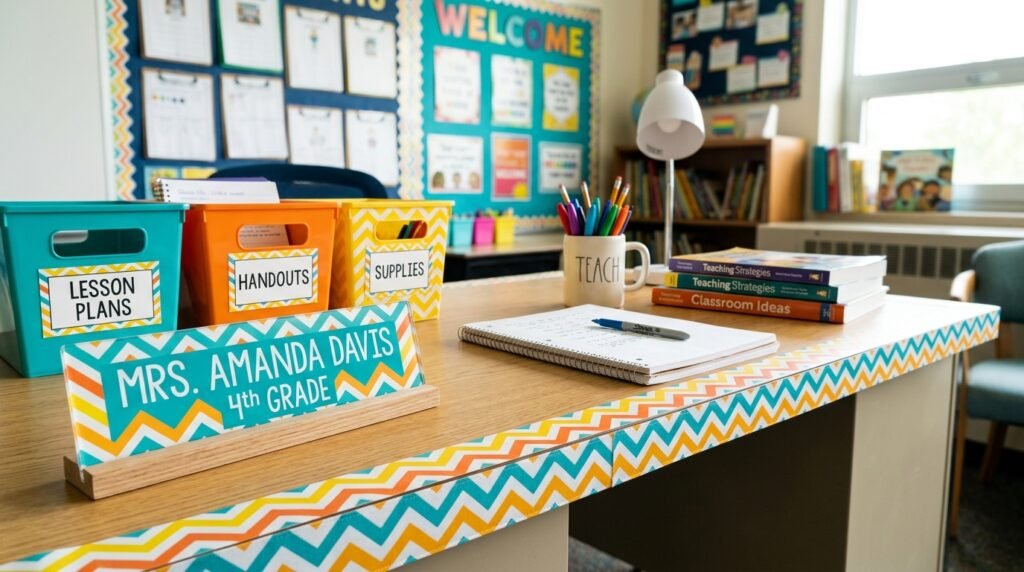
Choose one classroom decor collection, like a chevron or polka dot pattern, and apply it consistently across your desk border, name plate, and nearby bulletin board.
Keep the pattern contained to trim and accents rather than covering large surfaces, so it reads as playful rather than overwhelming.
Pick two or three colors from the pattern and repeat them in your storage bins and organizers to tie the whole area together.
A consistent pattern signals that the space was designed on purpose, which matters more than people realize in a room full of visual noise.
Final Thoughts
None of this is really about the desk. It’s about walking into a room every morning that feels like it’s actually yours, even for the seven or eight hours you spend there before heading home to the rest of your life.
A well-organized desk area doesn’t fix a hard day, but it removes one more thing you have to think about on top of everything else. That’s not nothing.
Whether you go all in on a farmhouse makeover or just add one labeled tray this week, small changes add up faster than a full classroom overhaul ever could. Start with whichever idea feels most doable right now, and let the rest wait for another weekend.